
"Hari-kirtana is a favorite among our teacher training students. He always takes us beyond fluffy, cloud-like explanations of yoga to the profoundly deep and life-changing potential that we're hungry for."
Gopi Sandal, Director of "Yoga with a Heart" Teacher Training

"My secret weapon as a yoga instructor is definitely Hari. From asana and philosophy to creating courses, Hari’s instincts, insights, and ability to help me focus and reach my goals have been invaluable."
Larry Milburn, Founder - Yoga for Dudes
You know there's more to yoga than movement and breath.
You want your students to leave your classes with a deeper understanding of themselves, new ways of looking at the world, and practical wisdom they can apply in their everyday lives.
But knowing it’s possible and knowing how to make it happen are two very different things.
So you spend your free time looking for answers.
One teacher tells you the Yoga Sutras mean one thing. Another tells you something else. A third says it doesn't really matter—just trust your intuition.

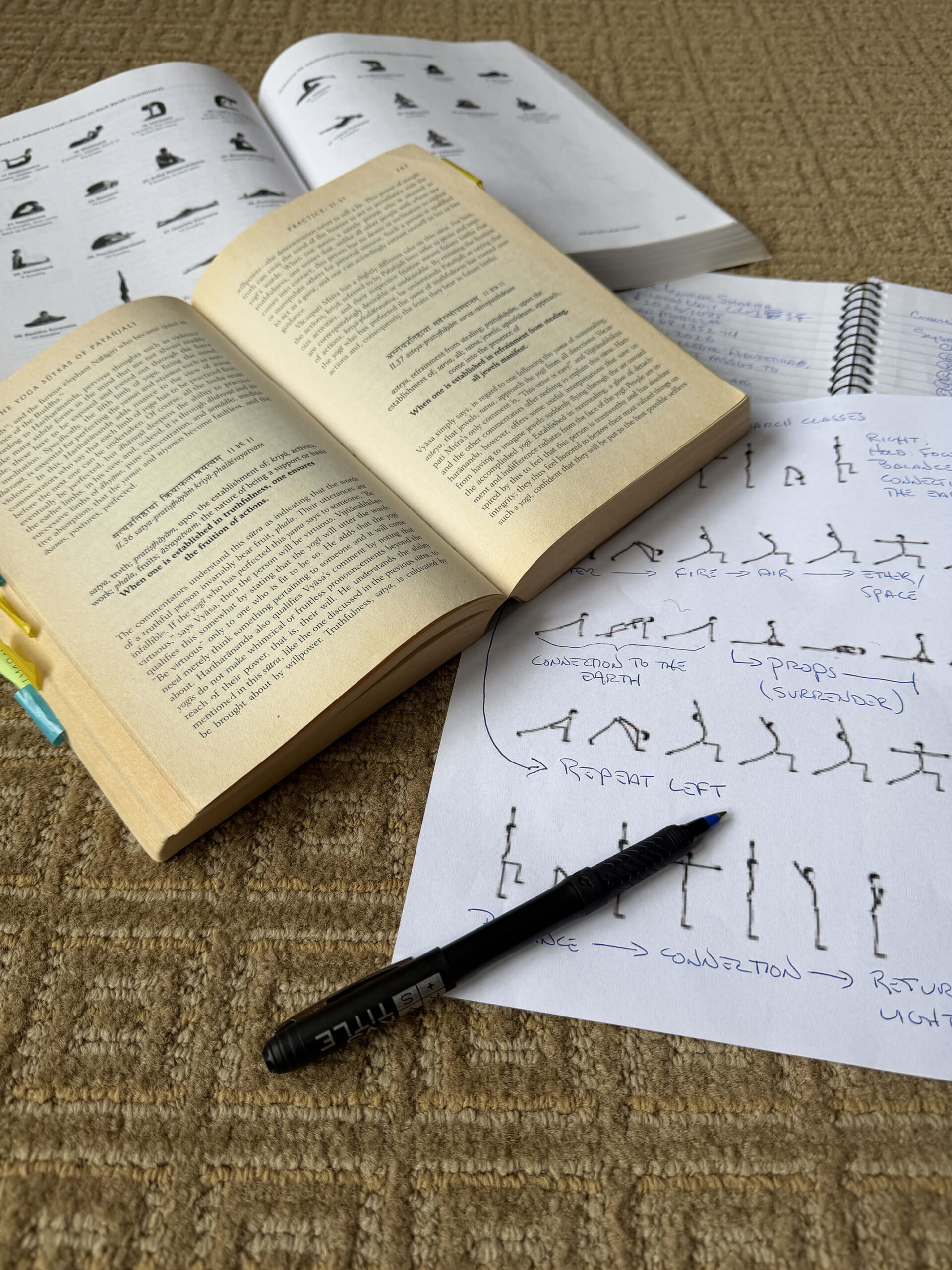
So here you are: Sunday night, three books open on the floor, a half-built playlist, trying to turn a month's worth of reading into a 60-minute class that somehow connects your sequence to the wisdom tradition it's based on.
And underneath that uncertainty is another question: whether the yoga wisdom tradition is even yours to share.
So you play it safe. You say enough to come across as thoughtful — but not enough to risk offending anyone.
The result? Your classes never feel quite as meaningful as you know they could be. Your themes feel borrowed instead of lived.
And no matter how much you study, you still feel like you're one dimension short of the teacher you want to become.
The problem isn't that you need more information. You just need a different way of making sense of what you've already heard.
Yoga philosophy is often presented in one of two ways: adapted to fit modern ideas, or studied at arm's length as an ancient system of thought.
I take a different approach.
Rather than looking at yoga philosophy through the lens of the modern world, I look at the modern world through the lens of yoga philosophy.
That means taking the tradition seriously on its own terms—even when its teachings challenge assumptions we take for granted.
And it means learning the way yoga philosophy has traditionally been learned: from teachers who received these teachings from their teachers. And with study, practice, and reflection working together to turn knowledge into lived understanding.
That's how I learned in the bhakti-yoga tradition.
And it's how I teach: preserving the timeless principles while helping you understand how they fit together, how to put them into practice, and how to share them with your students in ways that are relevant to their lives.
What it’s like to study with me:

"I got just what I was looking for - clear steps for action, as well as perspectives for reflection and deepening insight."
Ema Čulík, Yoga and Yoga Philosophy Teacher

"There was so much to learn. My favorite was the connection I could make with the material to my own personal day to day life."
Danielle Mccobb, Yoga Teacher
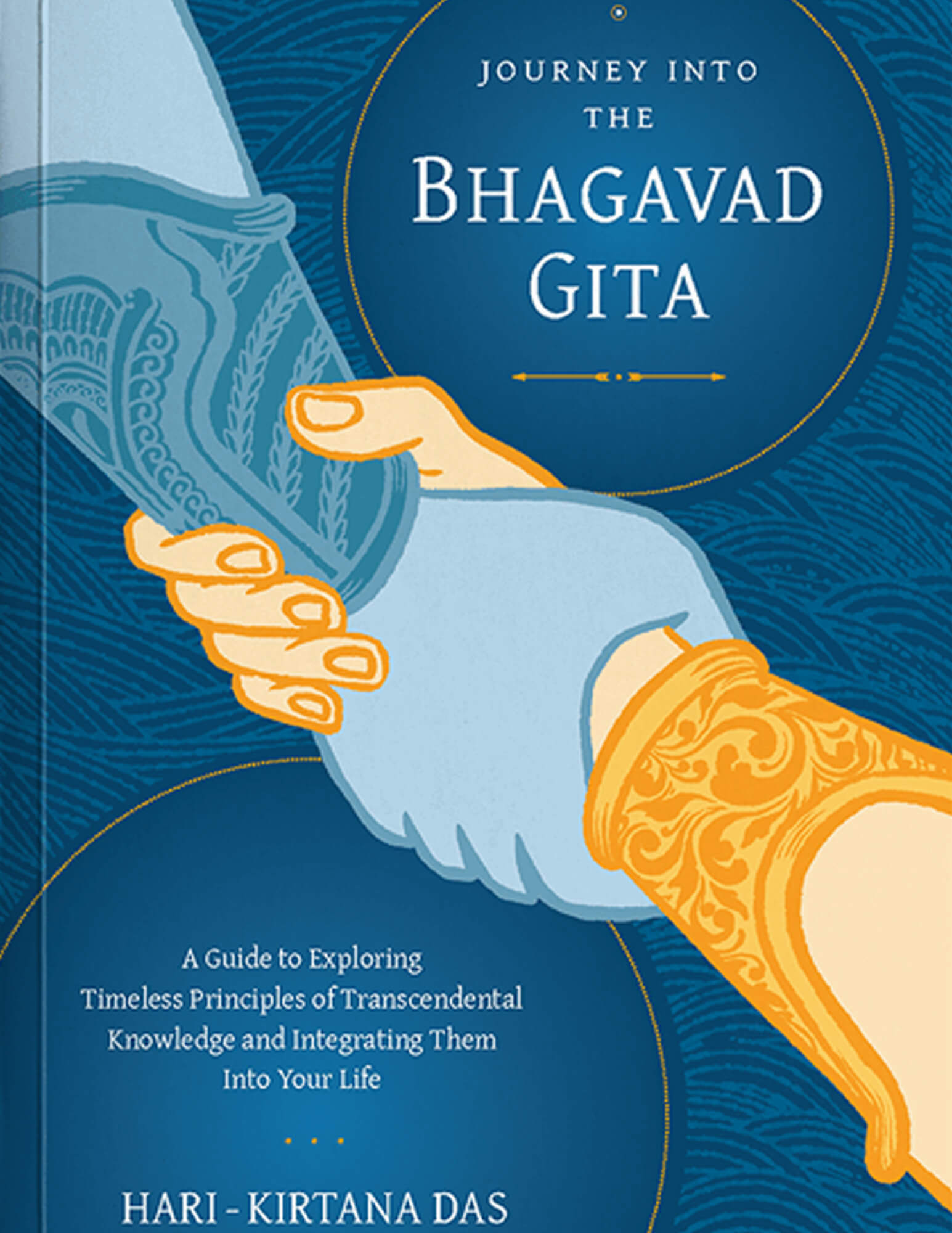
Download a free chapter from my book, Journey Into the Bhagavad Gita.
The Bhagavad Gita is one of yoga's most influential wisdom texts. Discover my clear, engaging approach to sharing yoga wisdom.